Guides
Conservatory blinds
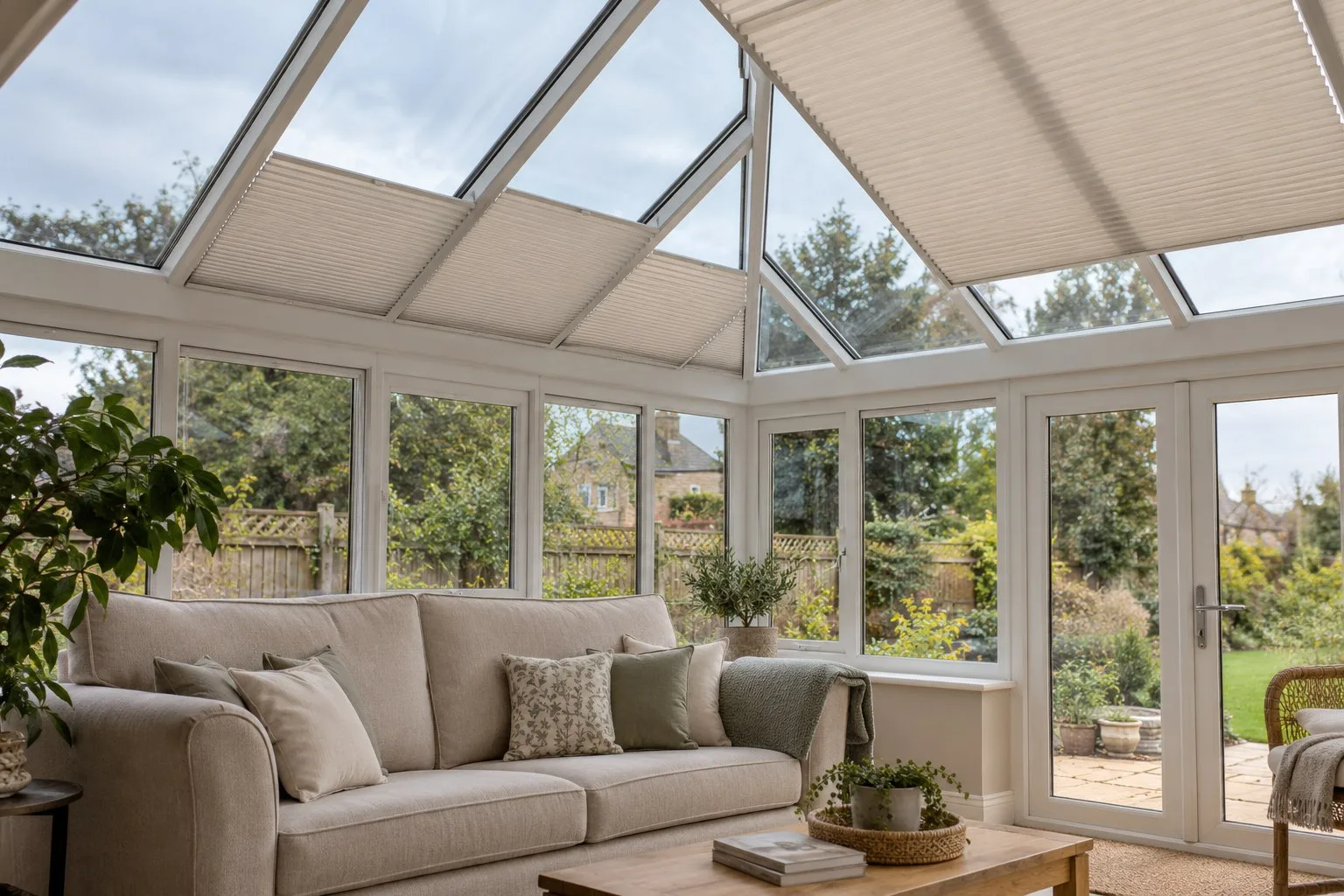
The best conservatory blinds are the ones that suit your roof and your sun. Blinds on the roof cut glare and summer heat and stop heat leaving at night. Blinds on the windows give privacy and shade at the sides. Most conservatories need both, and the right type depends on whether the roof is glass, polycarbonate or solid.
Conservatory roof blinds and window blinds are different jobs
Roof blinds do most of the work, because the roof takes the most sun. They sit under the glazing and run along the slope of the roof. That makes them harder to fit than a standard window blind. Window blinds hang vertically at the walls and doors, where the job is privacy and low sun.
Since the jobs differ, many conservatories use a different type for each. Ask a supplier for a measured quote for the roof. Roof blinds are cut to fit the angles of your frame.
The main types of conservatory blinds
- Pleated blinds. Fabric folds into a compact stack and the blind holds its shape on a sloping roof. Popular for roofs because they come in light-filtering and blackout fabrics.
- Roller blinds. Simple and inexpensive for windows and doors. Fitted on a roof, they need tension systems to keep the fabric flat.
- Venetian blinds. Slats let you tilt the light, which suits a bright room. However, they gather dust and can be fiddly to clean.
- Roman blinds. Soft and decorative, so they work best on vertical windows where the fabric hangs naturally.
- Perfect-fit frames. A blind in its own frame clips to the window or door frame without drilling. That suits uPVC doors and windows.
What conservatory blinds do for heat and glare
A reflective or heat-blocking fabric on the roof cuts how much heat gets into the room in summer, and Which? lists blinds among the ways to keep a conservatory cool. A blind with an insulating layer can also slow the heat leaving in winter. Neither replaces good glazing, though both cost far less than a new roof. If the room still overheats, look at solar control glass or a solid roof, then read our guide to an energy efficient conservatory.
What to check before you buy
- Roof angle and shape. A Victorian roof with several facets needs a blind cut for each one. A Victorian conservatory is more expensive to blind than a lean-to.
- Sun direction. A south or west-facing room needs heat-reflective fabric most. A north-facing room needs it least.
- Control. Manual cords, cranks and motors all exist, so choose by how easily you can reach the blind. A motor is worth having if the blind is hard to reach.
- Fixing. Check that the frame can carry the blind, and that fitting does not void the roof guarantee.
- Fabric. Look for fabric that does not trap heat against the glass and that is easy to wipe clean.
Next steps
Measure the roof and the windows with the sun’s direction in mind. Then get quotes from two or three blind suppliers who will visit and measure. If you are planning a new roof, ask whether the installer can include blinds. Fitting them with the roof can be simpler, since the fitters are already on site. For other ways to keep the room comfortable, see our guides to conservatory condensation and cleaning a conservatory.
Get quotes for your home
A guide price only takes you so far. Local firms can price the work on your own home, and comparing a few quotes is the quickest way to see what is reasonable.
Compare free quotes